Posts

TYPES OF NETWORK DEVICES
Image
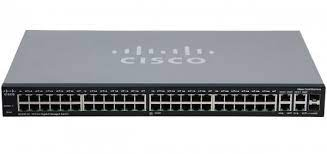
TYPES OF NETWORK DEVICES A network device is a piece of hardware or software integral to communication between a computer and an internet network. Network devices play two roles. The first is establishing a network connection, as a router or a modem does. The second one is maintaining, protecting and enhancing that connection, as with a hub, repeater, switch or gateway. 1. Switches  -    A switch is a multiport device that improves network efficiency. Switches maintain limited routing information about nodes in the internal network, allowing connections to systems like hubs or routers. Strands of LANs are usually connected using switches. Generally, switches read the hardware addresses of incoming packets to transmit them to the appropriate destination. 2. Bridges -   Bridges connect two or more hosts or network segments by storing or hosting frames between them. Bridges use hardware MAC addresses for transferring frames. They can forward or block data with the ...
Image
  WHAT IS THE DIFFERENCE BETWEEN HUB, SWITCH AND ROUTER? 1. Defining a Hub -  A hub, sometimes referred to as a network hub, is a device designed to connect multiple devices to a single network. It serves as a common connection point and is considered a physical layer network device. Its main function is to link several Local Area Networks (LANs) together. I s not considered a smart device as it forwards any data it receives on one connection to all other connections.  A single network is required to connect a hub.  A hub is less costly compared to a switch and a router. 2. Defining a Switch A switch is a network device that enables several devices to link together within a computer network. This device functions using a data link layer for connection. The primary method of data transmission used by a switch is packet switching, which allows data packets to be disseminated across the internet.  A switch operates based on MAC addresses.   A  smart ...

THE ELEMENTS OF COMPUTER NETWORK

Different types of Network Topology

Image
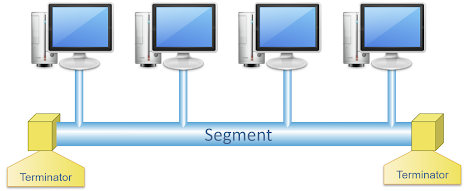
  Types of Network Topology Linear Bus Topology / Bus Topology  Star Topology  Ring Topology Mesh Topology  Hybrid Topology  1. Linear Bus Topology / Bus Topology         -  is a type of network topology in which all devices are connected to a single cable called a "bus." This cable serves as a shared communication medium, allowing all devices on the network to receive the same signal simultaneously. A terminator is place at each end of the backbone to keep the signals from bouncing back and being received again by the nodes in the network.  https://www.lenovo.com/us/en/glossary/bus-topology https://service.snom.com/ 2. Star Topology          -  is a topology for a Local Area Network (LAN) in which all nodes are individually connected to a central connection point, like a hub or a switch. A star takes more cable than e.g. a bus, but the benefit is that if a cable fails, only one node wi...